Layout guide for
compact towers.
A practical reference for understanding the design challenges and approaches specific to 35–55 m² tower apartments in Chile.
The four main layouts
we work with.
Chilean tower apartments in the 35–55 m² range typically fall into one of four layout configurations. Each has specific constraints and opportunities.
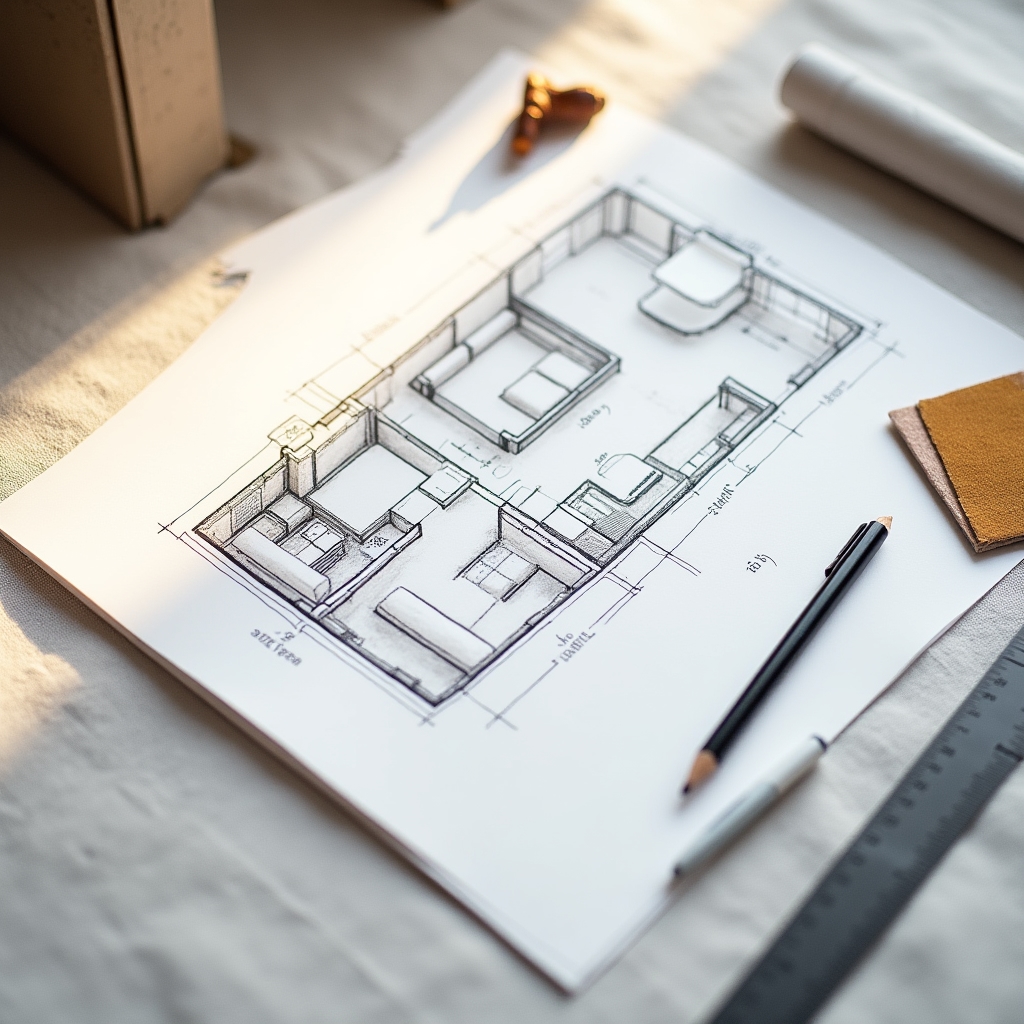
Open Studio
Single-space apartments where sleeping, living, and sometimes working areas share one volume. The primary challenge is zone definition without visual fragmentation. Furniture placement becomes the architecture.
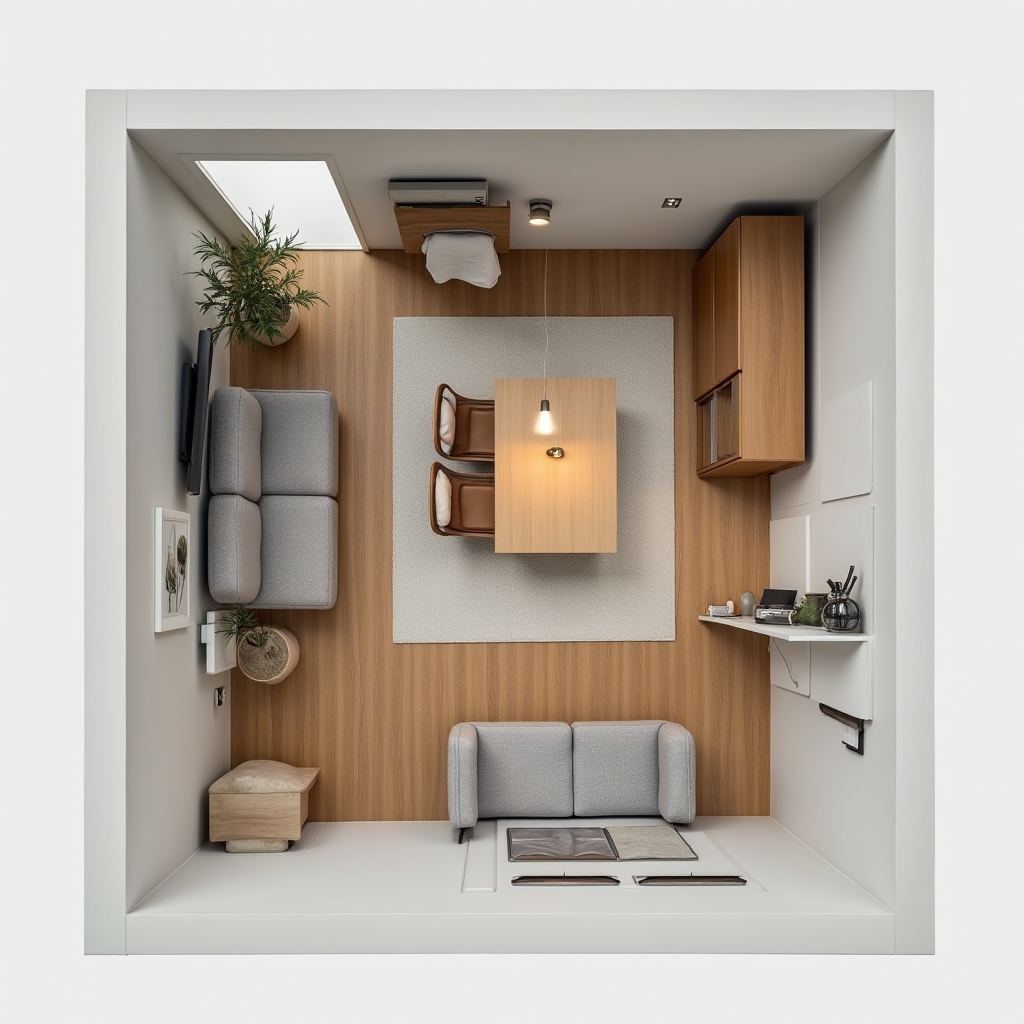
One Bedroom
The most common typology in Chilean towers. A separate bedroom allows better zone separation, but the living-kitchen area is typically very compact. Traffic flow between the entrance, kitchen, and living area requires careful choreography.
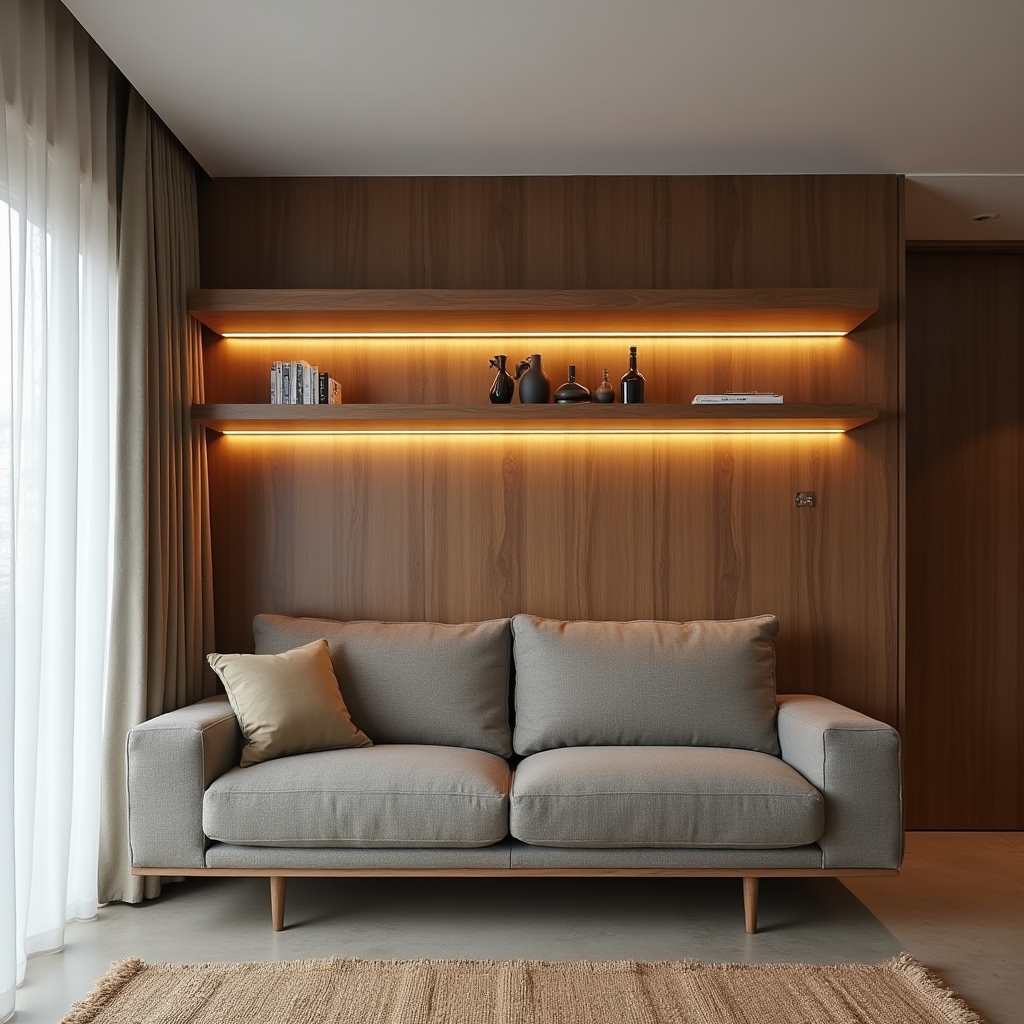
Two Bedroom Compact
Two bedrooms in under 55 m² means each room is genuinely small. The second bedroom often functions as a home office, guest room, or storage overflow. Furniture selection is critical — standard bedroom sets simply don't fit.
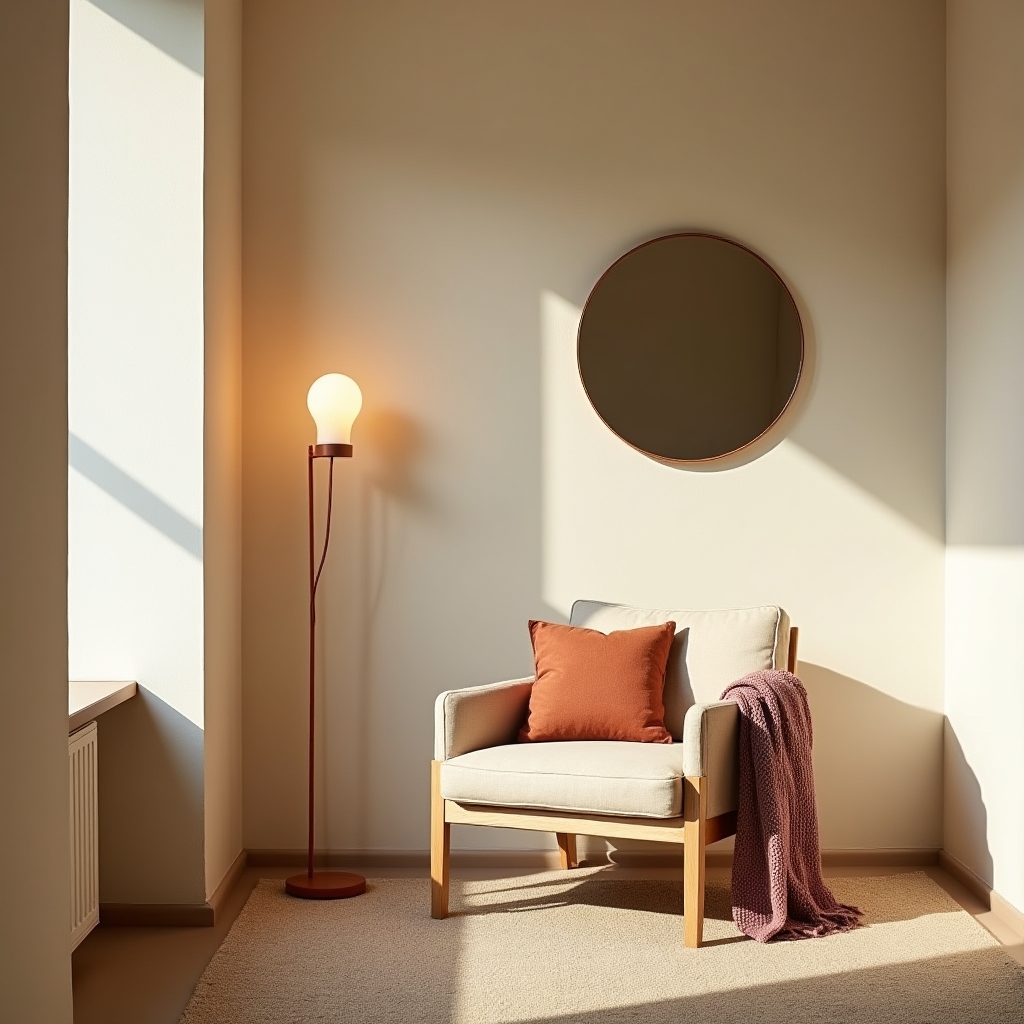
South-Facing Units
Orientation is not a typology in the traditional sense, but in Santiago it functions like one. South-facing apartments have consistent indirect light and require a specific approach to color, materials, and artificial lighting that differs from north or east-facing units.
Design principles for
compact tower living.
Furniture as Architecture
In compact spaces without structural flexibility, furniture placement defines zones and circulation more than walls do. A sofa positioned perpendicular to a wall can create a living zone from an open floor. A bookcase can define a corridor without enclosing it. Every piece of furniture is simultaneously a functional object and a spatial element.
The 60 cm Rule
In compact apartments, 60 cm is the minimum comfortable passage width. Every furniture arrangement must maintain this clearance on all primary circulation paths — from entrance to living area, from living area to bedroom, from bedroom to bathroom. Layouts that violate this feel cramped regardless of how they photograph.
Vertical Thinking
Floor area is finite; ceiling height is often underused. In Chilean towers, ceiling heights typically range from 2.3 to 2.5 meters. Storage that extends to within 30 cm of the ceiling doubles the usable volume of a wall without adding any floor footprint. The visual weight of high storage is mitigated by keeping the lower zones lighter and more open.
The Light Inventory
Before any design decision, we document the light conditions: orientation, window size relative to floor area, obstruction from adjacent buildings, and the quality of light at different times of day. This inventory directly informs color selection, material choices, and artificial lighting strategy. Designing without this information produces generic results.
Proportional Furniture Sizing
Standard furniture dimensions are calibrated for average room sizes that don't apply to compact apartments. A standard three-seater sofa is typically 220 cm wide — in a 35 m² apartment, this leaves almost no room for anything else in the living area. We work with a sizing matrix that matches furniture dimensions to room dimensions, not to catalog standards.
Color and Perceived Space
Color doesn't make small spaces larger — but it does affect how they feel. Light, warm neutrals with good reflectance values create a sense of openness without the clinical coldness of pure white. Accent walls in compact spaces are used strategically to create depth rather than decoration. The goal is a palette that feels considered, not safe.
What makes a compact apartment
feel smaller than it is.
These are the most common design decisions that reduce the perceived size and livability of compact tower apartments.
Oversized furniture
The single most common mistake. A standard sofa in a small living room blocks circulation and makes the space feel like a furniture showroom, not a home.
Low storage only
Keeping all storage below eye level wastes the vertical dimension and forces the visual weight of the room downward, making ceilings feel lower.
Single overhead light
One ceiling fixture creates flat, shadowless light that flattens the room. Layered lighting — ambient, task, and accent — creates depth and warmth.
Dark colors on all surfaces
Dark colors can work beautifully in compact spaces — but only when used deliberately and balanced with lighter, reflective surfaces. Dark everywhere absorbs light.
Furniture against all walls
Placing every piece of furniture flush against a wall creates a "waiting room" effect. Floating furniture slightly from walls and centering arrangements creates more dynamic, liveable space.
Ignoring the entrance
The entrance zone in compact apartments is often treated as a leftover space. A well-designed entrance — even in 2 m² — sets the spatial tone for the entire apartment.
Want a layout analysis of your apartment?
Send us your floor plan and we'll identify the specific opportunities in your space.